Showing posts with label childhood. Show all posts

Dear July, four // mirrors and becoming

Friday, July 8


When we were younger – like, a lot younger – my sister, Emilie, and I used to talk to ourselves in the bathroom mirror. Or, not really to ourselves. We imagined that we were addressing a captive audience on the other side of the glass. We were presenters of a TV show – a self-help programme for the seemingly incompetent – where we’d demonstrate nightly, through mouths full of Colgate, how to clean your teeth.

‘Goo eev-u-ning’ – was usually how it would go, tilting our heads back to try and slow the progress of white foam sliding down our chins – ‘Iss is ow you bruss oor teef’’ (For the record, it’s quite tricky to brush and speak simultaneously).  

I remember another mirror conversation – in our shared bedroom this time, the imagined audience now dissolved – where we both peered at our own faces, pulling at them, and one of us said,

‘What do you think we’re going to look like when we’re grown up?’ 


I sat there, scrunching my eyes to blur my reflection, trying to picture myself as an adult. The answer seemed a long way off, but I was curious to find out who I was going to become.

Well, last week when I was drying my hair, that memory popped back into my head and it caused an odd sensation to recognise – goodness – here I am “an adult” now and:

‘This. It turns out I look like this.’*

//

I turned twenty five on Tuesday. And, over the past few days, I’ve spent quite a bit of time writing and scrapping and then rewriting and re-scrapping a post about the significance (or perhaps insignificance) of this age: two five. The big ‘quarter of a century’ birthday. 


“I had to wait in a queue at the train-station on Monday,” I wrote in one draft, talking about noticing the decisive shift from Early-Twenties to Mid, “because if I tried to renew my Young Person’s railcard a day later, I’d no longer qualify for the discount.” 

“Girls we grew up with used to say, ‘I’m going to wait till I'm twenty-five to get married,’” I wrote in another, more introspective, draft. “Like, you could put in an order and exact delivery date for major life events and by twenty five you’d’ve seen and done and experienced enough of the world to be ready to settle down...”

None of the drafts were hitting the right tone though and – even though some were super wordy – none seemed to be saying anything other than: heavens, where on earth has the time gone? Which – even though: yikes, where has it gone, guys? – doesn’t make for a very interesting piece for *you* to read. So let me just say this instead:


I am now twenty-five years old. Yes. And this is what I look like. I think I’m realising, though, that there’s never going to be a year when I can say, with certainty: ‘This is who I am for sure. I’ve become who I am going to be’. Because ‘becoming yourself’ is a lifelong dance, it seems. And I’m still figuring out how to dance it.

This year: may I become more. More kind, more curious. More productive and more inclined towards attentiveness than distraction. May I become more willing to speak up, find more reasons to be thankful, write more words that will stick, go more places that bring light, spend more hours with the ones who build me up...

//

Notes.)

*About 'this is what I look like': I don’t mean that in a bitter ‘I am as ugly as a bear’ type way. Or a congratulatory ‘and a lovely face it is too’. More: ‘Huh. Well there you go. I’m an adult now and that is my face.’


ps. Even though I obviously don’t think of myself as a child anymore (that would be weird), it still feels odd to call myself “adult”. I keep on thinking of that Harry Potter spoof where Dumbledore looks down at Harry – played by Dawn French – and says in this serious voice, ‘You’re a woman, Harry.’

(‘Yer a woman, Melissa.’)

*Pictures in the post are by Helena Perez Garcia (her illustrtions are quite lovely, and her website is: here.)

// 

Dear July, seventeen to twenty: Budapest heat.

Tuesday, July 21

Dear July,

Today, a rather dark rainy heat-up-some-chicken-soup-to-make-yourself-feel-better kind of Monday, I’ve been thinking about Hungary.


The year I turned twelve, my family spent the summer in Budapest. My Dad was working over there for a few months, so we went to be with him. It was hot. The hottest it had been in years, apparently. We watched a lot of BBC World in our little apartment (the only TV channel in English and we grew thirsty for words we recognised) and there were continual cries of ‘Heat wave! Heat wave!’ on the news. On the days we went into the city – our feet clapping in flip flops, collecting dust from the streets – we’d practically sprint from one café to the next, buying bottles of cold water or Lipton’s lemon iced tea to gulp down. We spent all of our days in shorts or swimming costumes, jumping and splashing into the blue pool outside, diving for coins with goggles sucked onto to our faces. We had to sleep with the fan on full and windows cracked open – the sound of crickets and dogs barking and the opera singer next door practicing scales echoing long into the night.


We wiped watermelon juice from our chins, and licked peach juice off our wrists. We ate lemon sorbet ice-cream every other day. We put ketchup on pizza like the locals. We ate the best thing I've ever eaten - a big deep-fried fritter-type thing topped with sour cream and grated cheese called 'Lángos' - and have never found again since. Almost every time we went out for dinner, we’d order 'cucumber salad' as a side: cucumbers soaked in a vinaigrette dressing. One time we ordered ‘Grandma’s special cucumber salad’ because the name made us laugh, but when it arrived, it was just a plate of fat dill pickles (which forevermore made us suspicious of food described as ‘special’). They had bizarre translations for things on the menus. ‘Diced curd with graves’ was one option on the desert menu (literally no idea). ‘Chicken throat shaped pasta’ was another.


We went to the circus while we were there – silver clad trapeze artists, cats jumping from great heights onto red cushions. We visited a park full of old communist statues. We went to Lake Balaton and felt the mud squelching between our toes. We went into supermarkets so big the staff had to roller-skate from one end to the next. We bought vegetables that came straight from the fields, meaning they hadn’t been prettified, meaning the closer you got to the produce stalls, the stronger the smell got, meaning sometimes you’d pick up a nectarine and it would look deliciously juicy face up, but when you turned it over the reverse side would be crawling with flies


Living in a country where we were constantly faced with things we didn’t know – food, words, buildings, customs – could have been a small disaster. The three of us – my brother, my sister, me – were still quite young so were prone to whining, as children sometimes are (‘Whatsthat?’ ‘Idontlikeit.’ ‘Idontwantit’ ‘Whatsthat?’). But that summer knocked it out of us, I think. We had so much fun, and my Mum taught us to think of everything as "an experience".

‘We might not like it,’ she said. ‘But it’s all an experience, so we’ll just give it a go.’

‘It’s an experience,’ has now became short-hand for: ‘That was weird, but strangely wonderful’. By the end of the summer, we’d all grown a few inches; our hair had turned a few shades lighter, our skin had turned a few shades darker, and we’d stopped complaining as much. We spent the last few weeks laughing our heads off at things that no one seemed to find as funny as us when we got back home – ‘Well, you just had to be there, I guess.’ – but that was okay. We didn’t mind (#heatstroke).


I came across Anya Silver’s poem 'Doing Laundry in Budapest' today, which set me off on this path of reminiscing. (Forgive me. I hope this post isn't too long or self-indulgently nostalgic to read.) We have no photographs of it – they all got lost – but it’s a summer I remember in warm bursts of colour. Orange and browns and reds.

Silver (the poet I was reading today) writes about pickles, and covering her shoulders to get into churches, and the begging ladies on the street who sold half-dead flowers to passers-by and I recognised the images in her words: I’ve been there, I thought. I’ve seen those things. I’ve eaten those pickles. I bought those flowers. 


(Pictures - letters of the Hungarian alphabet - by: Anna Kövecses. 

Also: this song by reminds me so much of being there - it was 2003, after all. My sister and I listened to Delta Goodrem's album on repeat the first night we were there. We'd somehow managed to convince ourselves that there were terrorists running about outside our hotel so were trying to distract ourselves. Like I said, we were pretty young and had poor geographical knowledge so we had no idea where in the world Hungary actually was. Ha.)

Dear July, one: a moth's wing.

Wednesday, July 1

I opened my eyes this morning to sunlight, feeling quite quietly happy. Happiness is a difficult kind of emotion (or ‘state’) because it is not – I’m noticing – the absence of fear. It’s clear-water-flowing kind of lovely. But it’s also fear-inspiring. It is fragile and translucent and if you hold it up to the light, you can often see through it. (I have the image here of one of the contestants on The Great British Bake Off holding up a square of dough she’s just been kneading, telling the camera-man, ‘If you can see through it, like little stained glass windows, then that’s how you know it’s ready’ – light shining through, but little holes already starting to form on the surface).


The question this morning then is: how to live with that? How to allow oneself to be happy – to feel the warmth of it, light of it, soft feathery touch of it – while living with this ‘fear’ (or knowledge) of its fleetingness. The temptation is to cling on tightly, to grasp.

Over the past six or seven months, I’ve been living with the phrase: ‘Hold all things with an open hand’. It came quite clearly into my head one day in the dark of winter and in the months that have followed I keep returning to it, trying to figure out what it means and whether it’s something that’s worth paying attention to. 


Last night, I was thinking about something my my Gran said a few evenings ago when she was over. She was talking about a moth my little cousins befriended in the garden last Friday when she was watching them after school. ‘Ollie the moth,’ she said, laughing. ‘That’s what they called him.’ They’d both been kneeling on the grass next to it, whispering encouraging things, trying to get the moth to climb onto their finger by pushing it with a leaf. When she realised what they were doing, she called out, ‘Oh, just be careful, girls. If you touch a moth’s wings you might damage them and it won’t be able to fly anymore. Maybe just let him alone.’

(Side-note: I remember her telling me this piece of moth-wisdom when I was little. Although, I can’t quite imagine in what context. My cousins seem much braver than me when I was their age as you’d have been far more likely to find me running away from the moth than christening it and coaxing it closer. From the ages of about seven to eleven, I used to go to bed every night praying: ‘Dear God – please don’t let any insects come into my room tonight.’ 


When, screaming, I discovered a spider lurking on the ceiling one night, and then a bluebottle a few nights later, I realised that my prayers were clearly too vague and God needed much clearer instructions if He was going to help me out. Thus began the ever-expanding List of Undesirables that I’d recite nightly to make sure He was crystal clear about what I meant. ‘No wasps, God. No flies, no spiders, no earwigs, no woodlice, no beetles, no worms, no ants, no caterpillars...’ I’m pretty sure moths were somewhere on that list).

Anyway – I was thinking about what she said again last night. ‘If you touch a moth’s wings, you’ll damage them...’ I think that might be what happiness is like: Happiness is a moth’s wing. It’s beautiful and strong. It allows for flight. But it’s also extremely delicate. So: notice it. Enjoy it. Sit with it. But be gentle with it. (A difficult thing to do). Let it come to you, but hold it with an open hand

Be gentle.


Partly inspired by Emily Diana Ruth’s video series ‘Letters to July’, I’ve set myself a challenge to write something on here every day this month in an effort to be more attentive. (I'm also in the middle of a PhD, so most of the posts will be much shorter than today's...) 

As well as writing every day, I’m also going to read a poem each morning this month. Today’s one was: Full Moon by Alice Oswald.

where the buttons go.

Tuesday, April 14


Buttons are always falling off of me. I’m always losing them. They are always losing me. Sometimes they dangle for weeks – hanging off my coat like a wobbling tooth until I tug. Snap. And all that’s left is the thread. Sometimes they disappear without saying goodbye. Ping. Pop. Rattle. Bounce. Rolling down pavements, down the gutter. Down and down. Never to be seen again.

There’s a place underground where the buttons go. Buttons and socks and kirbies and rings and keys and shoes and tights and teeth. And that red Polly Pocket I lost when I was five. And the words I forgot in the middle of talking. All the things that I’ve lost. Marbles and dice. And watches and pens and letters and names and needles and doodles and Monopoly houses. And all of those photographs that were wiped from the computer. Quite without warning. Just one day: deleted. The three of us shivering in the pool in the summer. Emilie hopping in the garden, bare feet. That one of me, twelve, in Budapest heat, so small, smiling under the willow tree’s sway. Gone. Gone. Not a pixel left over.

All the things that I’ve lost. All my vests. Those addresses. The person I was until something else happened. The person I thought I was likely to be. All my chewing-gum packets, and hair bands, and scotch tape. The minutes I’ve spent on trains that aren’t moving. The minutes I’ve spent squeezing spots by the sink. All the minutes I’ve spent on the bus, in a queue, on my phone, by the mirror. Or just waiting for someone. All that waiting. And waiting. All the thoughts in my head that I didn’t write down.

That’s where the buttons go. Or so I imagine. They're all there, underground, where the lost things live.


This is a piece that came out of a free-writing exercise I gave my students on the last day of class. I like buttons, so I thought, 'Hey, why not? I'll do it too'. The writing prompt (in case you'd like to do also) is pretty much: 'pick a button, look at it, turn it over, think about what it reminds you of, who it might've belonged to, set a timer for 15 minutes, don't plan, just start writing, and writing, and writing until the time runs out. Just see what happens.' Some people wrote stories. Some wrote descriptions. This is (a slightly edited version of) what I came up with

My Gran kindly donated the buttons we used in class. We spent the Friday evening before, sifting through her button box, looking for the ones with the most 'story potential'. (Thank you, Grannie-Anne.)

Dear Tidy-Up Lady

Sunday, October 7

My mum found these letters a few weeks ago when she was tidying up our ‘school room’.
 
 
I wrote them to the tidy-up ladies (i.e. chamber maids) when we were staying in a hotel in Leeds.
 
 
I must have been about nine or ten, because I thought 'text language' was cool, and I still brought millions of soft animals with me everywhere (teddies, cats, dogs, squirrels, fluffy dogs. I wrote down all their names before I left the hotel room each day - an inventory of sorts - so I’d know if anyone decided to nick any of them).
 
 
I liked the idea of the tidy-up lady unlocking the door to our room, dragging the hoover in behind her, sighing a little, suppressing a yawn as she started to fold up sheets ...and then spotting the letter on the bed. I liked to think of her smiling when she saw it, and hoped the memory of it would stay with her the rest of the day.


(I also liked getting extra biscuits. And the most exciting thing was when one of the ladies actually wrote back...)


words, words, words

Saturday, July 14


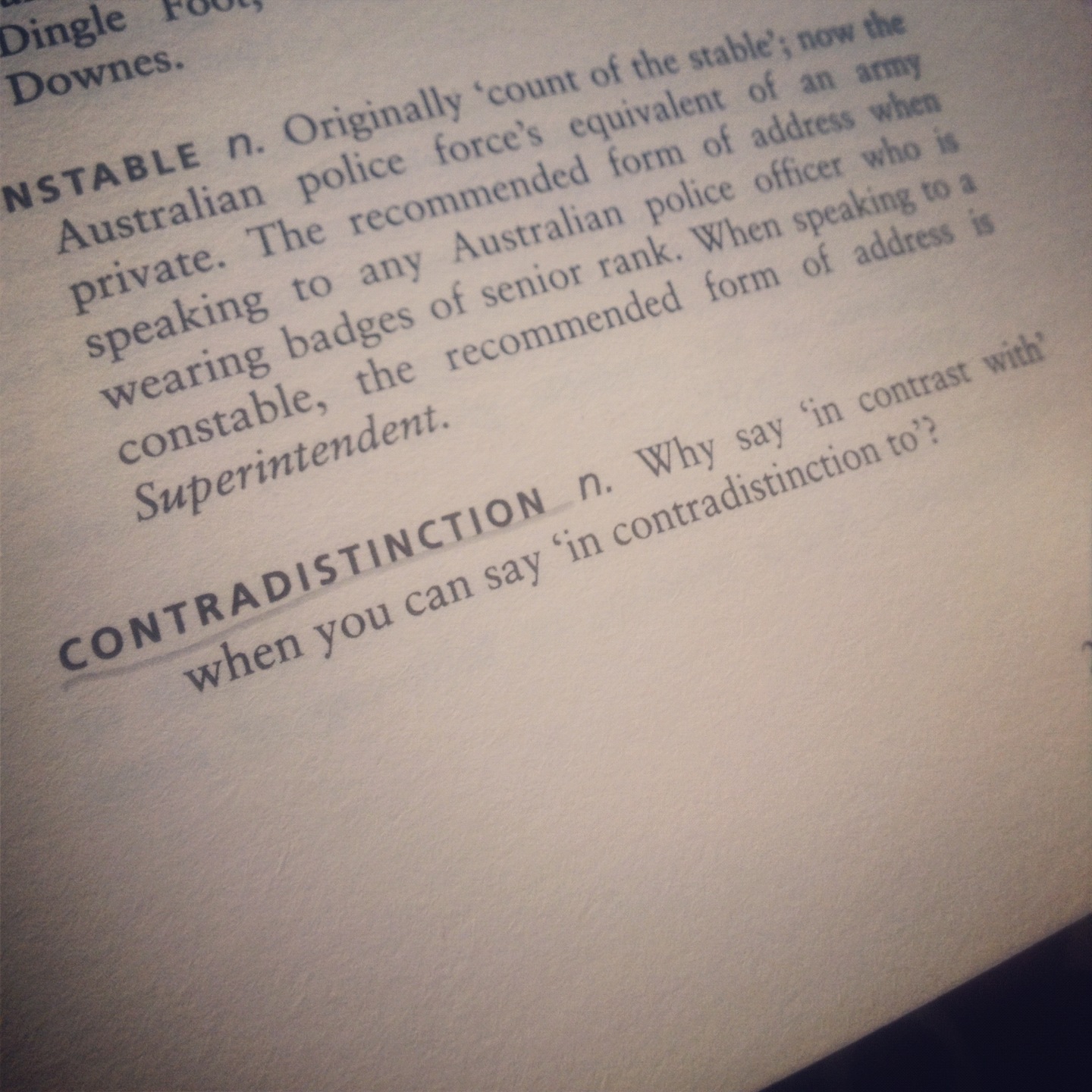
I have been reading The Great Gatsby (notice the very beautiful cover) and like it very much so far. While I was reading it the other day, I came across this (very long) word:

I’d never come across it before! Apparently it means: ‘to walk or perform another act while asleep or in a sleep-like condition’. I love coming across interesting words in books (even if I can't quite pronounce them)!
I love scenes in books/films that start with rain
In first year English at university, we had to keep a reading diary. I wrote one of my entries on a children’s book (‘The Magician’s Elephant’) by Kate DiCamillo and remember there being a number of words in there that I thought were unusual choices for a children’s book (words like ‘exorbitant’, ‘cataclysm’, ‘edification’, ‘verbatim’, and ‘equivocated’, to name a few).
The words suited the sentences DiCamillo was writing though ...and I think the best way to learn new words is through stumbling upon them in a book. I hate when people talk down to children (mostly because I remember hating being talked down to). I think the only way children (or any reader) can learn is if they are challenged (...within reason).
On another (unrelated to the lovely DiCamillo) note... as much as I love interesting words, I do have a bit of a thing about writers using overly complex words just for the sake of it. It seems a bit self-indulgent and alienating to the readers. More about showing off the writer’s cleverness than honouring the idea they are trying to express.
Good writers, I think (or the ones that I would like to be like) choose their words very carefully, turning them over, tapping them, tasting them, trying to pick the right words for the idea. Sometimes that means dipping into the ‘lovely long word box’, but sometimes it just means using a simpler word! (I think my writing often verges on being a bit too simple. I'd like to find more of a balance.)
All the word-pictures (after the rain sentence) come from this book (that one up there). I bought it because the title made me laugh... and the descriptions are quite funny.
(Oh, and p.s. I got an iPhone on my birthday so I've gone a bit Instagram crazy.)

from my window

Wednesday, May 30

As I sit here typing, the sky is tinged with pink. The lighthouse across the water flashes a tiny spot of white light every ten seconds. I can remember standing by this window in my pyjamas when we first moved in, counting, waiting for the flash (‘One elephant. Two elephants. Three elephants...’). Having a lighthouse across the water was one of my favourite things about this house. That... and the fact the house had stairs in it. (We used to live in a bungalow so stairs were a novelty ...I’ve always been easily pleased.)


There are birds whistling outside. Only... is whistling the right word? It’s difficult to write about birds singing without it sounding a bit clichéd...

‘Chirping’, ‘chattering’, 'twittering', ‘tweeting’ (ha!)

... no word seems to describe everything that is caught inside the sound (peacefulness, solemnity, innocence...)


This is something I’d like to work on over the summer... learning how to put words to life in a way that captures the essence of things. The kind of writing I’m interested in is found somewhere in-between the kind of writing which is bleak and unemotional and the writing which is unrealistic and saccharine. It's easy to fall into either extreme, but I want to try and be more balanced. I want to write words which ring true, words which celebrate the extraordinariness of 'ordinary' life without being sentimental... (this is kind of what my dissertation is going to be about next year).
 .

Along that subject... here is something interesting that I read recently about sentimentality and women’s poetry:
‘Cutting across time and culture, women’s literature has always emphasised feeling. In the nineteenth century in [America] – with the notable exception of the poetic genius of Emily Dickenson – feeling in women’s poetry fell into a sticky goo of sentimentality. Sentimentality comes from an inability, for whatever reason, to look reality in the face. For its power, it depends on the stock response. The feelings expressed are derived ones, feelings not authentically based within the writer ...’
~ From Marilyn Sewell’s introduction to the poetry anthology Cries of the Spirit.
Definitely something to be avoided! She writes later on about the importance of writing with and about feeling:

‘To honour feeling is in itself prophetic, in a cultural system that glorifies the “rational” and the scientific as the sole authors of our salvation while we plunge headlong toward hell. Women’s poetry most often exists to move us, not to entertain us with clever use of language, nor to explore abstract philosophical positions. It is a way to the heart. It opens the door to the spirit.’
Interesting!
 
Anyway... after this somewhat all-over-the-place post, I’m going to go to my bed. (It is now completely black outside and the only thing I can see through the window is my own reflection!)

(Pictures from: Becca Stadtlander.)

love set you going like a fat gold watch

Tuesday, May 8

Hello! I hope this (somewhat cloudy Tuesday) finds you well. Here are a few recent noticings:


[One.] I was walking to the library last week. It is in the middle of Glasgow – a place of exhaust fumes, grey buildings, people gliding past each other like shadows – and I was thinking about nothing in particular when a bus drove past. The wind it stirred up caught in my hair, and hundreds of cherry blossom petals were swept up from the side of the road and started to dance along beside me. I don’t even know where the tree was... but the petals were beautiful. Cherry blossoms are one of my favourite things about the spring. 


[Two.] We were eating dinner last night (griddled chicken with salad and poppy seed bread) and I looked out the window. There, meandering past our house, was a tiny girl in pink welly boots and her Gran. The Gran was trying to hold an umbrella over the girl’s head to keep her dry, but the wee girl kept stopping every few minutes to jump in puddles. It's funny (in a not-meant-to-be-corny way) how things that we think of as a bit of a nuisance when we’re older – like puddles and snow – are the source of great excitement to small children.


[Three.] I was studying the other day in the ‘school room’, stumbling my way through T.S. Eliot’s confusing/nonsensical poem ‘The Waste Land’, when my ears heard a lovely sound: the running of water, the click of the kettle being turned on, the scraping of the teapot lid being removed, the cupboard doors banging open and the clinking of mugs being taken out. The sounds of tea being made, especially when you aren't expecting it (but are desperately needing a cup), are musical.


[Four.] Another kind of music (as in actual music): my brother and I were listening to this song recently. Haunting. Best listened to with the sound turned up, on a really good sound system (i.e. not the computer. We listened to it in the car, and could literally feel the music).


(The title of this post is the first line of Sylvia Plath's poem 'Morning Song'. A rare poem of Plath's that isn't full of disturbing imagery.
The pictures are from: Susannah Conway's website. Her pictures are simple in a lovely way.)

gifted.

Tuesday, April 24

Hello! The next few weeks I'm going to be studying for my 20th Century Literature exam, but I will endeavour to keep updating on here! So... I thought I'd put up another one of my columns from the Strathclyde Telegraph.  

  
Something I've Noticed: What's in a Name? 
(from the Strathclyde Telegraph. Issue 2. November 2011)

   There's a queue of about twenty people snaking around the shop. They are all waiting for the self-service checkouts. ‘Insert cash or press: Pay with Card.’ ‘Unexpected item in bagging area.’ ‘Notes are dispensed below the scanner.’ A chorus of the same voice grows louder the closer I get to the machines. I abandon this queue and opt for the real-person checkout.


    ‘Do y’need a hand to pack?’ the assistant asks. I shake my head and she scans the items. While I’m rummaging for my purse, she continues her conversation with the assistant at the next till.
    'Oh I know how you feel, Happiness,’ she is saying. ‘Tell me about it.’
    I look over at the other lady. She has tired brown eyes and lets out a long weary-filled sigh. I glance at her nametag and (yes, I heard that right) her name is Happiness. It’s almost ironic as, today at least, she looks positively UN-happy.
    'We’re just too tired, love,’ my assistant tells me, handing over my change. ‘Been working too hard.’ Happiness nods. ‘Receipt okay in the bag?’
    On the bus home, I find that ‘Happiness’ is still floating around my head. It’s an unusual name, but a lovely one. No hidden meanings, it gets straight to the point. It’s almost fairytale-like, like a wish her parents whispered over her when she was sleeping: ‘May happiness follow you all the days of your life.’ I wonder, though, if she finds her name difficult to live up to. I’m sure that she, like everyone else, has bad days – days where she wishes she hadn’t got out of bed, or when people have said words that cast clouds over her eyes; days when the idea of ‘happiness’ couldn’t seem further away. And yet, there it is: it’s her name and a part of who she is.
    The bus rumbles along the motorway. My ears pop as someone shuts a window. I’m remembering one night when I helped to choose a name. My mum was pregnant with my little brother, and my sister and I were sitting with her on the sofa, feet dangling off the end.
   'Luke.' 'Christopher.' 'Ben.'
   We spoke out all the names we liked best. We were trying to imagine a little boy in our house called one of them.
   'Lewis.' 'Matthew.' 'Tom.'
   I wanted to call him Mowgli, mostly because I was just three-and-a-half and I thought it would be hilarious. It wasn’t until he was born, though, that my mum knew his real name. She looked at him and she knew he wasn’t a Michael or a Winnie the Pooh (another of my suggestions). He was Evan. Nothing else would fit.
 
    Beneath the hum of the engine, I catch muffled sounds: a murmur of conversation, the rustle as someone opens a crisp packet. I’m trying to imagine a world without names. It is a cold world: impersonal. I wonder if when people stop thinking about each other in terms of their names, they stop thinking about them as individuals. I read a story once where this happened. It was written by lady who lived through a World War II concentration camp. She described how the camp’s prisoners were stripped bare – stripped not only of their hair and clothes, but also of their names. Names were replaced with numbers, and in the process identities were lost.
    As the bus slows down at my stop, I hop off and start walking towards home. I’m remembering how Madeleine L’Engle, one of my favourite writers, thought that ‘Naming’ was an act connected to loving. Giving someone, or something, a name shows that you think they’re worth something – worth your notice, worth your time, worth your love.
    Our names, I think, are more than simply a collection of symbols and sounds. They have meaning. They are chosen. They are gifts.
 
(Pictures are from various summer birthdays in my family.)
Proudly designed by | mlekoshiPlayground |